The basic order
Saya mau nasi goreng. ‘I want fried rice.’
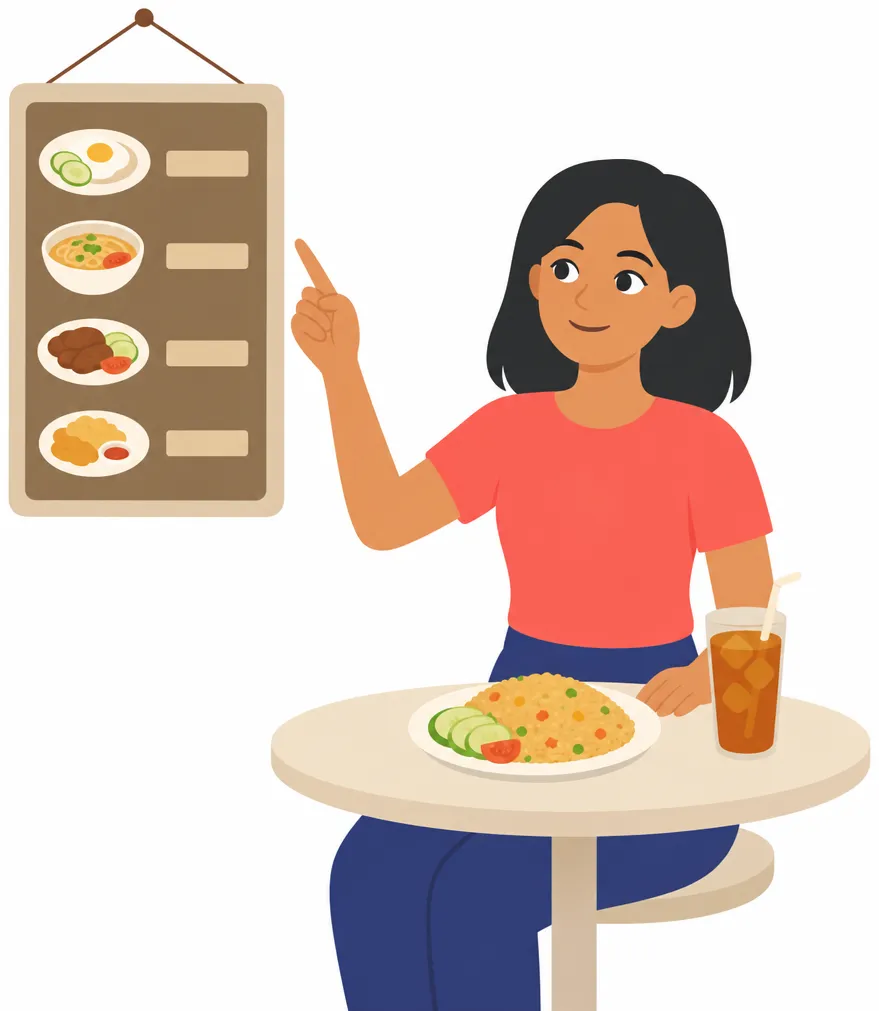
Mau is direct and completely normal. To soften it:
Minta nasi goreng, ya. ‘Fried rice, please.’
Minta is ‘to ask for’, and adding ya at the end turns it from an instruction into a request.
The question you will be asked
Makan di sini atau bungkus? ‘Eat here or takeaway?’
Bungkus means wrapped. Street food comes wrapped in paper or a plastic bag with a rubber band, and the word is used everywhere.
Bungkus, ya. ‘Takeaway, please.’
Quantities
Dua, ya. ‘Two, please.’
Satu lagi. ‘One more.’
Lagi is ‘again, more’. It is the same lagi that replaces sedang in speech, doing a completely different job. Context separates them without difficulty.
Drinks, and the one thing to specify
Es teh ‘iced tea’, teh panas ‘hot tea’, air putih ‘water’, literally ‘white water’.
Indonesian drinks are sweet by default. If you do not want sugar:
Tanpa gula. ‘Without sugar.’
Jangan manis. ‘Not sweet.’
Paying
Mau bayar. ‘I’d like to pay.’
Berapa semua? ‘How much altogether?’
In a warung you usually pay at the end and simply tell them what you had. Nobody writes it down and nobody checks.