Terima kasih is thank you. It is two words: terima ‘to receive’ and kasih ‘love’, which is a pleasant thing to know but does not help you remember it any faster.
The three registers
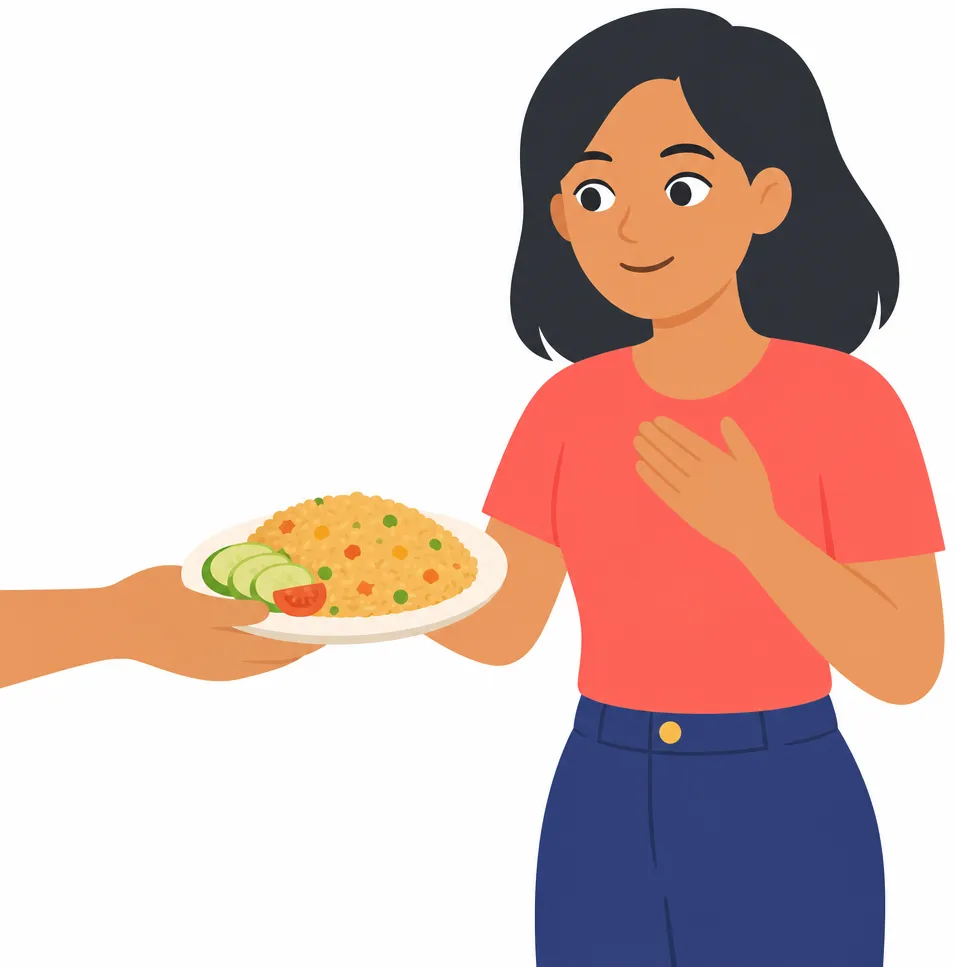 Terima kasih. ‘Thank you.’
Makasih. ‘Thanks.’
Makasih banyak. ‘Thanks a lot.’
Makasih is terima kasih worn down by use, exactly the way tidak becomes nggak. It belongs to friends, messages and anyone you are on easy terms with. Keep the full form for someone older, for officials, and for anyone you would call Pak or Bu.
For real gratitude, terima kasih banyak adds banyak ‘a lot’.
Answering
Sama-sama. ‘You’re welcome.’
Literally ‘same-same’, and the sense is warmer than the English: we both got something out of this. It is by far the most common reply, and it works in every register.
Kembali also exists and is more formal. You will read it more than you hear it.
In casual speech a simple iya ‘yeah’ does the job, often with a small nod.
The part that will feel wrong at first
English speakers thank people constantly, for small things, several times in the same exchange. Indonesian does not work that way. Thanking a close friend for passing you a glass of water can land as slightly distancing, as though you were treating them like a stranger.
Nobody will be offended. But if you notice that your terima kasih is met with a faint look of surprise, that is why. Between people who are close, the thanks is understood rather than said.
Keep thanking strangers, shopkeepers and anyone doing you a service. Let it drop with friends as you get comfortable.
And in Bali
Thank you in English is understood everywhere tourists go, and many people will answer you in English if you use it. Using terima kasih instead is a small signal that you are not passing through, and it changes how the conversation goes more often than you would expect.