Renting
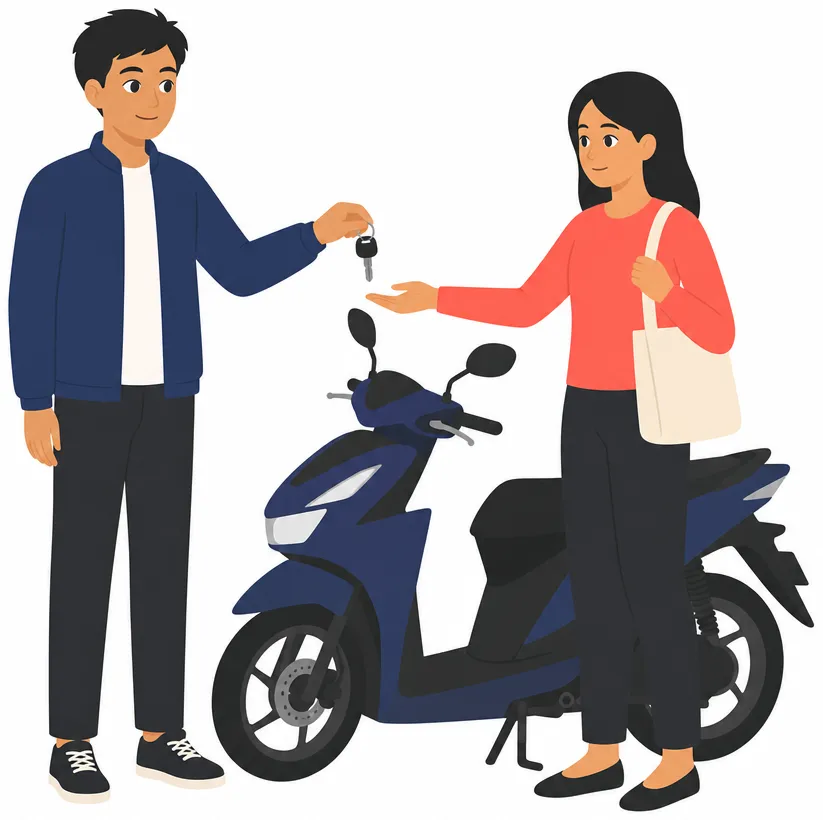
Saya mau sewa motor. ‘I want to rent a motorbike.’
Berapa sehari? ‘How much per day?’
Seminggu berapa? ‘How much for a week?’
Se- is the prefix meaning one, the same one hiding inside sebelas and seribu. Sehari is ‘one day’, seminggu ‘one week’.
Fuel
Bensin is petrol. At a station:
Isi penuh. ‘Fill it up.’
At the roadside stalls selling it in bottles, you simply say how much money’s worth you want:
Dua puluh ribu. ‘Twenty thousand worth.’
Taking a ride
Antar saya ke Ubud, ya. ‘Take me to Ubud, please.’
And the sentence that matters most:
Berapa ke Ubud? ‘How much to Ubud?’
Agree the price before you sit down
This is the single habit that prevents every transport argument in Indonesia. Ask the fare, agree it, then get on. Once you are moving, your negotiating position is gone, and a price agreed at the destination is a price set by whoever is less tired.
The apps have made this less necessary in cities, where the fare is fixed on screen before you book. Outside them, and for anything arranged in the street, ask first.
Two more that earn their place
Pelan-pelan ‘slowly’. A doubled adjective, and a complete sentence on its own when addressed to a driver.
Berhenti di sini. ‘Stop here.’ In speech, stop di sini is just as common, borrowed straight from English.
What you’ll actually hear
What the book says: Tolong antarkan saya ke Ubud. What you’ll hear: Ke Ubud, berapa?