How things are sold
By weight, by piece, or by bundle.
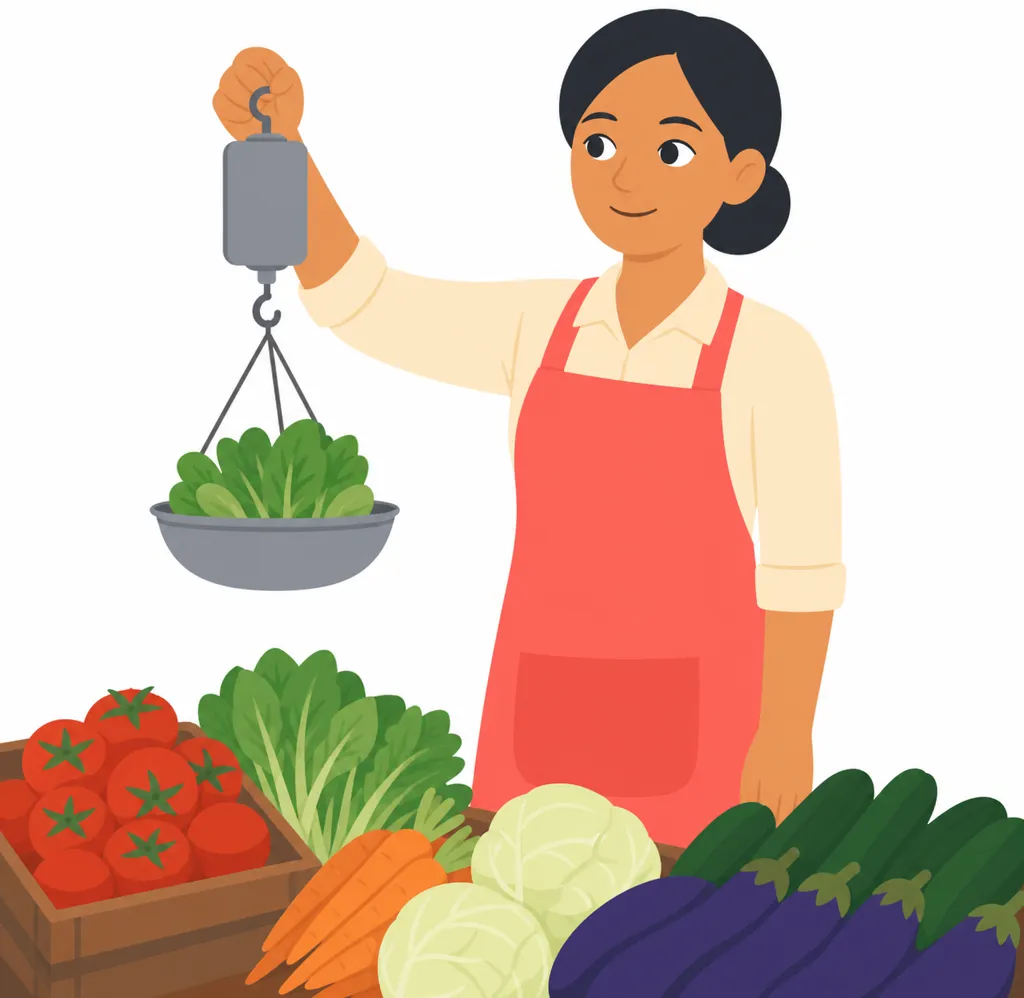
sekilo ‘a kilo’
setengah kilo ‘half a kilo’
seperempat ‘a quarter’
satu ikat ‘one bundle’, for greens and herbs
satu sisir ‘one hand’, for bananas
Minta sekilo, ya. ‘A kilo please.’
Asking about condition
Segar? ‘Is it fresh?’
Sudah matang? ‘Is it ripe?’
Masih mentah. ‘Still unripe.’
Matang means both ripe and cooked, which is convenient at a market and confusing at a warung, where it also describes how you want your egg.
Choosing
Boleh pilih sendiri? ‘Can I pick them myself?’
Worth asking. In many markets the vendor selects for you, and a polite request to choose is normally granted.
The price
Sekilo berapa? ‘How much a kilo?’
Semuanya berapa? ‘How much altogether?’
Produce prices are less negotiable than souvenir prices, but rounding down is normal, especially if you come back.
Bulatin aja, ya. ‘Just round it down.’ Casual, and it works.
Becoming a regular
Langganan means a regular customer, and it is a real status. Buying from the same vendor twice changes the price you get, and saying so out loud is welcome:
Saya mau jadi langganan. ‘I’d like to be a regular here.’
This is one of the few phrases in this course that will save you more money than the entire bargaining lesson.
What you’ll actually hear
What the book says: Berapa harga satu kilogram tomat?
What you’ll hear: Tomat sekilo berapa, Bu?