The words
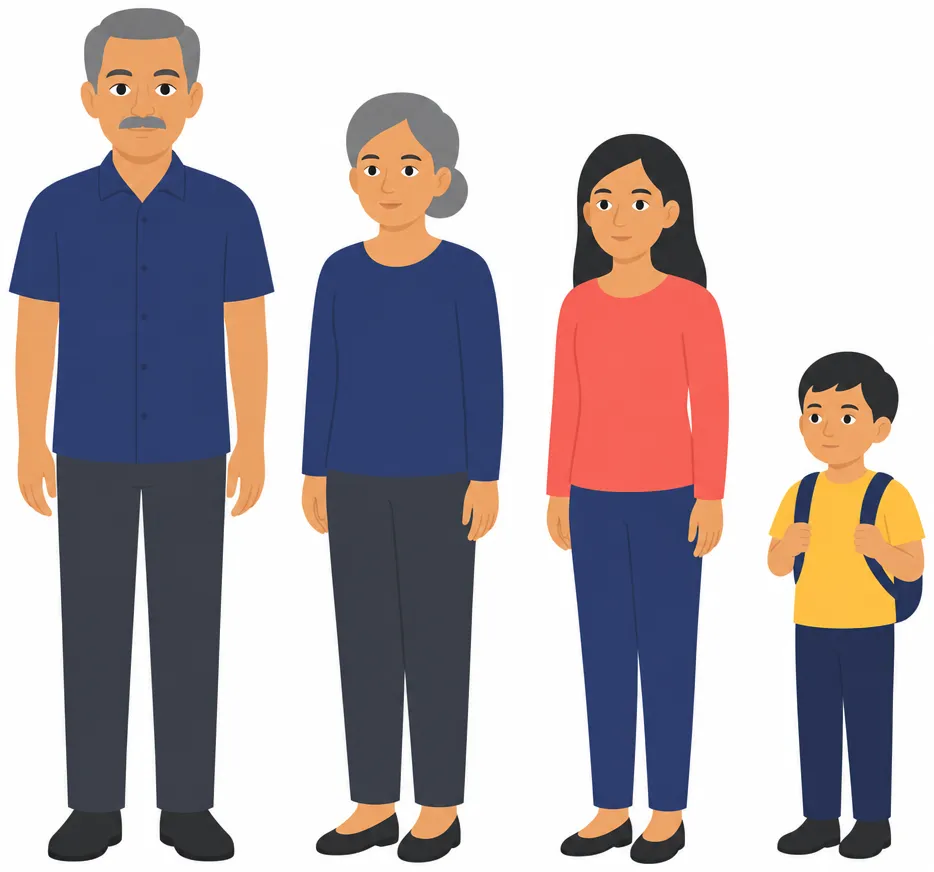 ibu ‘mother’
bapak or ayah ‘father’
anak ‘child’
suami ‘husband’
istri ‘wife’
nenek ‘grandmother’
kakek ‘grandfather’
om ‘uncle’, tante ‘aunt’
Om and tante come straight from Dutch, and they are two of the clearest surviving traces of colonial rule in everyday vocabulary.
Ibu and bapak are the same words as the polite titles you already met. Calling a stranger Bu is calling her mother, which tells you how the respect is built.
The part with no English equivalent
Indonesian has no word for brother and no word for sister. It has:
kakak ‘older sibling’
adik ‘younger sibling’
Gender is not part of the word. If it matters, you add it:
kakak laki-laki ‘older brother’
adik perempuan ‘younger sister’
But most of the time it does not matter, and Indonesians do not bother. What matters is who is older, because that determines how the two of them speak to each other.
This is the mirror image of English, which insists on gender and ignores age entirely.
Kakak and adik outside the family
Here is where it becomes useful daily. These words are used for people you are not related to at all, based on apparent age.
A waiter slightly older than you is Kak. A younger one is Dik. You will be called Kak by teenagers and Om or Tante once you pass a certain age, which arrives sooner than you would like.
Kak, boleh minta menu? ‘Excuse me, could I have the menu?’
This sits alongside Mas and Mbak from the titles lesson. Mas and Mbak are Javanese in origin and neutral; Kak and Dik carry a little more warmth.
Asking about family
Sudah menikah? ‘Are you married?’
Punya anak? ‘Do you have children?’
Both arrive early in conversations with strangers, and neither is considered intrusive. Answering belum ‘not yet’ rather than tidak ‘no’ is the softer form, and it is what Indonesians say themselves regardless of their actual plans.