Appearance
tinggi ‘tall’, pendek ‘short’
kurus ‘thin’, gemuk ‘fat’
cantik ‘beautiful’, for women
ganteng ‘handsome’, for men
tua ‘old’, muda ‘young’
Adjectives follow the noun, as always.
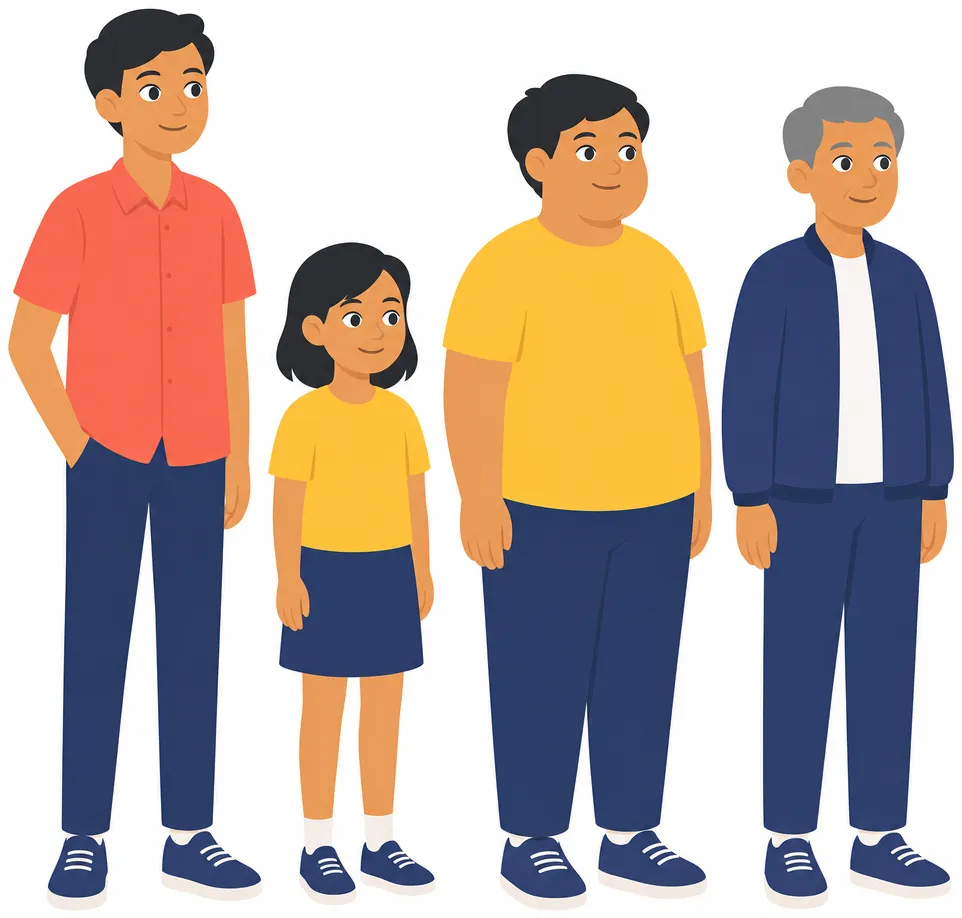
Dia orang yang tinggi. ‘He’s a tall person.’
Character
ramah ‘friendly, warm’
baik ‘good, kind’
sombong ‘arrogant’
pintar ‘clever’
rajin ‘hard-working’
malas ‘lazy’
lucu ‘funny’
galak ‘fierce, short-tempered’
Two of these carry more weight than their translations suggest. Ramah is the highest ordinary compliment you can pay someone, and being called it matters. Sombong is a real accusation, and foreigners get it more often than they realise, usually for not greeting people.
The comment you did not expect
Indonesians remark on weight, skin and age openly and without intending an insult.
Kamu gemukan, ya. ‘You’ve put on weight.’
Iteman sekarang. ‘You’ve got darker.’
These are observations, in the same register as noticing a haircut. They are not barbed, and reacting as though they were is confusing for everyone.
The reverse also happens: kurusan ‘you’ve lost weight’ is said just as freely, and is not necessarily a compliment either.
Bule
Bule is the word for a white foreigner. It is not a slur, though it is not exactly neutral either. You will hear it about yourself constantly, often affectionately, sometimes as shorthand for “someone who will pay more”.
What you’ll actually hear
What the book says: Dia adalah orang yang sangat ramah.
What you’ll hear: Orangnya ramah banget.
Note orangnya, literally ‘the person of it’, which is how Indonesian introduces a description of someone already under discussion.